The old fence is leaning or soft at the base
Wood posts fail first where they meet the soil. A few leaning posts can be reset; a line where most posts are soft at grade is usually a replacement.
Fence repairPrivacy, aluminum, vinyl and chain link fences and gates, set in Georgia clay and planned around the Johns Creek permit and your HOA.
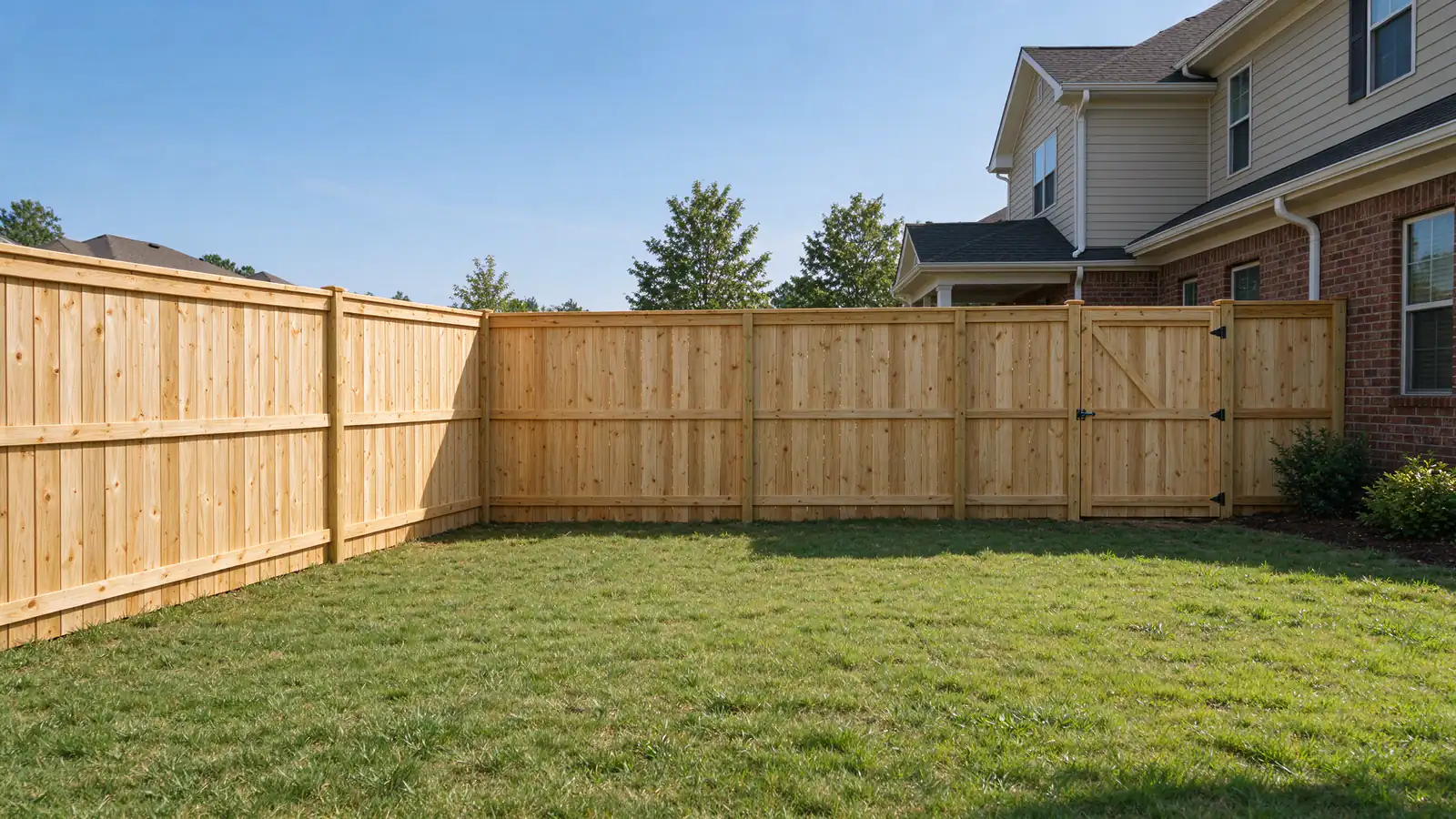
Wood posts fail first where they meet the soil. A few leaning posts can be reset; a line where most posts are soft at grade is usually a replacement.
Fence repairPool barriers follow the Georgia pool and spa code, and gate hardware matters as much as the fence height. Plan the fence with the pool permit, not after it.
Pool fencesDiggers need a bottom barrier, jumpers need height, and both need a gate that latches on its own. The fix depends on which kind of escape it is.
Best fence for dogsMost subdivisions here have design rules on height, style and color. The HOA packet and the city permit both need the same site plan.
HOA approvalA new fence and a replacement fence go through the same Johns Creek permit. The difference is what comes out of the ground first, and whether the old line was ever in the right place.
The estimate starts with the line itself: the plat or survey, where the pins are, utility marks, trees in protected buffers and how the yard falls. Upright Johns Creek Fencing builds the site plan the permit and your HOA both ask for, so the drawing is done once.
Post depth and footing size depend on fence height, wind exposure and what the auger finds. Clay subsoil holds water around a post, so the bottom of the hole gets a drainage base; stony ground can stop an auger and change the method.
Old posts set in concrete come out with their footings, the holes get backfilled, and the debris is hauled away. Existing posts are reused only when they are sound and in the right place, which is rarer than it sounds.
Johns Creek reviews the permit; your HOA reviews the style; the crew follows the same drawing in the yard. Gate positions, corners and where the line steps around trees are marked on it, so nothing is decided on install day.
Most privacy fences in Johns Creek are pressure-treated pine, usually 6 feet tall, built as board-on-board or shadowbox. How long one lasts is decided mostly at the base of the posts.
Overlapping boards leave no see-through gaps even after the wood shrinks. It uses more lumber and catches more wind, so posts and rails need to be sized for it.
Boards alternate on each side of the rails, so it looks the same from both yards and lets some air through. You can see through it at an angle.
Moisture and termites attack where wood meets soil. Posts should be rated for ground contact, set so water drains away from the base, and kept clear of mulch piled against them. Gravel under each footing lets water drain instead of sitting against the wood.
Treated pine needs to dry before it takes stain well, often a few months after installation. A stain protects boards from sun and water; it cannot fix a post that is already soft.
Six feet is the usual backyard height, and 8 feet is the residential maximum in the Johns Creek zoning code (confirm with the city and your HOA). A taller solid fence catches more wind, so post spacing, post size and footing depth go up with it.
In north Fulton the failure point is almost always the post at grade, not the boards. Wet clay around the footing, mulch piled against the wood and termites working up from the soil all attack the same few inches. A fence on posts rated for ground contact, with a drainage base under each footing and concrete crowned to shed water, outlasts one set in plain soil. Keeping sprinklers off the boards and soil off the bottom rail helps too, and no stain changes what happens below grade.
How long a wood fence lasts in GeorgiaNew treated lumber often arrives wet from the treatment process. Stain applied too early sits on the surface, blotches and peels. A simple check: sprinkle water on a board; if it soaks in, the wood is ready, and if it beads, wait a few more weeks. Cedar and kiln-dried lumber can usually be finished sooner. After that, a fence in full sun generally needs a fresh coat sooner than one in shade, and a cleaner removes mildew before restaining. Test a few boards in sun and shade.
When to stain a new fenceEach of these is the right answer for a different yard, and nearby cities do not all allow the same ones. Sandy Springs, for example, does not allow new vinyl fences at all.
| Vinyl | Aluminum | Chain link | |
|---|---|---|---|
| Best at | Solid privacy with no staining | Open views, pools, street-facing yards | Containment at the lowest cost |
| Watch for | Racking limits on slopes; cracked panels after impact | Gate spans need heavier posts | Johns Creek limits it along a street; coated fabric is common |
| Typical Atlanta-area range | $20 to $40 per foot | $25 to $50 per foot | $8 to $24 per foot |
Many aluminum panels rack to follow a slope; most vinyl privacy panels have to step down in level sections, which leaves triangular gaps under each panel on a steep yard.
The Johns Creek zoning code does not allow wire or plastic fencing, including chain link with slats, along a street in single-family subdivisions (confirm with the city before you buy materials).
Vinyl is allowed in Johns Creek, but Sandy Springs prohibits new vinyl fences except like-for-like replacement, and Peachtree Corners does not list vinyl among its permitted materials. Check the rules for the address before choosing it.
Aluminum and chain link gates are light and stay square on standard posts; vinyl gates need an aluminum insert frame to keep from sagging. Wide openings in any material need heavier gate posts.
A gate is the part of a fence that moves every day, so it fails first when the post behind it is too small or the footing is too shallow.
A 4-foot walk gate needs a hinge post sized for its weight, a diagonal brace running from the bottom hinge corner up to the latch side, and a latch that closes without lifting the gate.
Double gates need a drop rod and a stop, and enough clearance to swing over the driveway's slope. The zoning code keeps automobile gates back from the right-of-way (20 feet in Johns Creek; confirm with the city).
An opener adds power, controls and safety equipment that stops the gate when something is in its path. Swing or slide depends on the driveway grade and the room beside it.
Gate posts carry a moving load the line posts never see. They are usually larger, set deeper and anchored in a bigger footing, and wide or heavy gates may need a steel post even in a wood fence. A gate that is planned with its posts stays square much longer.
Hinges, latches and drop rods are matched to the gate's weight and finish, with corrosion-resistant fasteners in treated wood. Self-closing hinges are used where a gate must close on its own.
Tightening hinge screws rarely fixes a sagging gate for long. Usually the hinge post is leaning, the gate has no diagonal brace, or the brace runs the wrong way and pulls the gate down instead of holding it up. Check whether the post moves when you push it: if it does, the post needs a new footing or replacement before the gate will stay square. Anti-sag cables and wheels help light gates but do not fix a loose post. Wide gates often need a steel post or frame.
Why gates sagA swing gate needs a clear arc on the side it opens toward, which many sloped Johns Creek driveways do not have, so leaves are often hung to open downhill or split into shorter double leaves. A sliding gate needs runback space beside the opening roughly as long as the gate itself, plus a track or a cantilever frame that keeps it off the ground. Automation adds safety equipment either way, and the zoning code sets how far back from the street a vehicle gate sits.
Swing vs sliding gatesA repair makes sense when the damage is in a few parts and the rest of the fence is sound. When the same failure shows up along the whole line, replacing piece by piece costs more over time.
Each post is pushed and probed at grade, rails are checked at the fasteners, and gates are checked on their posts. The goal is to separate parts that failed from parts about to.
After a storm, the damage is often one or two sections pushed over by wind or a falling limb. Posts that snapped at grade usually show rot that was already there; posts that tipped with their footings intact can often be reset. Photos help sort this out before a visit.
Wood can be matched by style and size, though new boards look different until they weather. Vinyl and aluminum repairs depend on whether the same panel and color are still made.
A post leans because its footing moved in soft ground, the wood rotted at grade, or wind loaded a solid fence until the footing gave. A post that is solid but tilted can sometimes be pulled plumb and reset with a new footing. A post that is soft at ground level gets replaced, and its neighbors get checked too, because posts of the same age in the same soil fail together. Bracing a rotten post only delays the replacement. Neighbors of a failed post are probed too.
Fixing a leaning postCount what has failed and why. If posts are failing along most of the run, the fence is reaching the end of its life and repairs only move the problem down the line. If damage is local, from a storm, a tree or a car, and the rest is sound, repair is the better use of money. A fence built off the property line or against the HOA's rules is a replacement no matter its condition, and in Johns Creek a replacement needs a permit.
Repair or replaceA pool barrier has one job, and the rules for it come from the Georgia pool and spa code and the local permit office, not from the fence catalog.
Georgia adopted the International Swimming Pool and Spa Code with state amendments. Some cities inspect the fence as part of the pool permit; Roswell, for example, permits and inspects pool fences with the pool.
Aluminum is common because it does not block the view of the pool. Openings, bottom gaps and anything that could be used as a foothold all count toward compliance.
Most barrier problems are at the gate: hinges that let it drift open, latches set where a child can reach them, or gates that swing the wrong way. Hardware is chosen for the gate before the fence is built around it, and gates are checked to close and latch from any open position.
A backyard fence can sometimes serve as part of the pool barrier, but only if its height, gaps and gates meet the code. Older privacy fences with wide bottom gaps or horizontal rails on the outside often need changes first.
The barrier rules for a backyard pool come from the International Swimming Pool and Spa Code as amended in Georgia, applied through your city or county permit. Barrier height, openings, gaps at the bottom, footholds, gate swing direction and latch height are all specified. Some cities inspect the barrier as part of the pool permit, as Roswell does. Nobody can promise an inspection result in advance; the barrier is built to the code and then inspected. Temporary barriers may be needed during construction.
Georgia pool fence rulesNorth Fulton still has pasture, especially toward Milton. A horse fence is a containment system, and a decorative rail fence is not the same thing.
Board, horse-rated mesh and polymer rail each handle leaning, rubbing and visibility differently. Corners and ends carry the load and need bracing. Electric offset wire is a specialist add-on, quoted only when requested.
Woven wire, rail and gates sized for equipment. The Johns Creek zoning code exempts agricultural fences in the AG-1 district from permits and bars barbed wire on single-family lots (confirm with the city).
Pasture and field gates are sized for the tractor or mower that has to pass through, with room to swing on uneven ground. Hinge posts on long gates are braced like corners, because they carry the same kind of load.
Long runs follow the land, so woven wire is stretched between braced ends and the line posts follow the grade. Low spots and creek crossings need their own treatment, because water and debris push fences out of line there.
Where pasture backs onto single-family lots, height, opacity and barbed wire rules can differ on each side of the line. The rules for the lot the fence sits on decide what is allowed.
Horses lean on, rub against and sometimes run into fences, so visibility and some give matter as much as strength. Board fences are easy to see but get chewed and need repair; horse-rated mesh keeps hooves out; polymer rail flexes under impact. Mesh openings must be too small for a hoof, there should be no sharp edges or protruding fasteners, and corners and ends need bracing. Gates should open wide enough for a tractor. Paddocks and pastures load fences differently, so the choice can change between them.
Horse fence materialsHOA amenity areas, stormwater ponds, office parks and storage yards need fences that are built to a specification and scheduled around the people using the site.
Security chain link with gates, aluminum around amenity pools, and wood or aluminum screening. Johns Creek allows chain link security fencing around stormwater facilities.
Access windows, drawings, submittals and coordination with a property manager matter as much as the fence. Estimates spell out who handles the permit and the site plan.
Commercial gates see daily traffic from vehicles, staff and residents. Hinge posts, drop rods, cane bolts and latch hardware are chosen for that use, and access control equipment is specified with the gate rather than added later.
Damaged sections at amenity pools, dumpster enclosures and storage yards are often urgent because the fence is part of security or a pool barrier. Temporary panels can hold a gap closed while the permanent repair is scheduled.
Property managers and boards usually need a scope, product data and photos of finished work for their records. Those are part of the estimate and the closeout.
Security perimeters favor heavier chain link frameworks; amenity pools favor aluminum barriers with self-closing gates; screening at dumpsters and equipment favors wood or composite panels on steel posts.
Estimates for commercial sites list the access windows, the drawings and who pulls the permit before work is scheduled.
The site plan is drawn once and used for both approvals, before materials are ordered.
Johns Creek, Sandy Springs and Peachtree Corners do not allow the same materials or heights. The rules for your address shape the quote.
Hole depth, footing and drainage follow what the auger finds, not one number for every yard.
Typical ranges are published here and the cost tool gives a range without a call.
Upright Johns Creek Fencing offers and manages fence projects; the installation is done by licensed and insured fencing contractors.
What the fence is for, how long the line is, any HOA or pool deadline.
The line, grade, gates, trees, utilities and the soil.
HOA packet, Johns Creek permit and the Georgia 811 request.
Posts first, then rails, boards or panels, then gates.
Gates swung and latched, line checked, debris gone.
Tell us the length, the material you are leaning toward and whether an HOA is involved. The estimate starts from there.
These are typical Atlanta-area budgeting ranges for installed fence, per linear foot. They are not quotes. Gates, tear-out, slopes and permits are extra.
Posts, rails and boards; gates, tear-out and permit extra
Posts and panels; height and style move it most
Posts and panels; pool-rated and taller styles cost more
Johns Creek requires a fence permit both for a new fence and for replacing an existing one, applied for through the city's online Customer Self-Service portal. The application includes a site plan showing where the fence goes, its height and its materials. The zoning code also sets a residential height limit of 8 feet from grade, a 3-foot setback from a public right-of-way with a landscape strip, and limits on wire and plastic fencing along streets in single-family subdivisions; confirm those with the city for your lot. Apply before installation is scheduled, because review times vary.
The Johns Creek permit, step by stepThe City of Johns Creek does not enforce subdivision covenants, so your HOA's architectural committee decides on style, height and color separately from the city permit. Most committees ask for a site plan, a photo or drawing of the style, the height and the color or stain. Some restrict front-yard fences or require a specific style that matches the neighborhood. Submitting the same site plan to the HOA and to the city avoids drawing it twice, and getting the HOA's approval first avoids a permitted fence the HOA asks you to change.
HOA fence approvalJohns Creek's zoning code calls for fences along property lines to be built with the finished side toward the neighboring property, and Sandy Springs and Peachtree Corners have the same rule in their codes. On a standard privacy fence that means the rails and posts face your yard. On a board-on-board or shadowbox fence both sides look finished, which is one reason those styles are popular in north Fulton subdivisions where neighbors share long rear lot lines. HOAs sometimes add their own rule on which side faces the street.
Which side faces the neighborA recorded plat shows the lot's dimensions and easements and is what Johns Creek asks for with a permit; copies come from the City Clerk through a public records request, using the street address or parcel number. A plat does not mark the corners on the ground. When the fence will sit close to the line, a licensed surveyor can locate or reset the corner pins. An old fence is not proof of where the line is: many were built inches or feet off it, and replacing one in the same place repeats the mistake.
Do you need a survey?Drainage and utility easements run along many rear and side lot lines in north Fulton subdivisions, and the plat shows where they are. A fence built in an easement may have to come out if the easement holder needs access to a pipe, swale or utility line, usually at the owner's cost. Some counties ask for written permission from the easement owner, such as an HOA or developer, before a fence goes in a drainage easement. Fences across swales also need gaps or raised bottoms so water can still flow.
Fences on easementsGeorgia law requires a Georgia 811 locate request before digging with mechanized equipment, which includes a powered post-hole auger. The request goes in a few business days before installation, and utilities mark their lines with paint or flags. A locate request expires after 30 days. Private lines such as irrigation, landscape lighting, invisible dog fences and lines to detached buildings are not marked by 811, so point them out before digging starts. Posts near marked lines are hand-dug or moved.
811 before fence postsA 150-foot run of 6-foot wood privacy fence at a typical Atlanta-area $20 to $30 per foot lands around $3,000 to $4,500 before gates, tear-out and the permit. Each walk gate typically adds $150 to $600, and driveway gates more. Vinyl runs about $20 to $40 per foot and aluminum about $25 to $50. Slopes, rock, tight access for equipment and the number of corners and gates move the number as much as the material choice does. The cost estimator gives a range for your length and material.
Fence cost in Johns CreekWood costs less to install and can be repaired one board or post at a time; vinyl skips staining but cracks on impact and can be hard to match years later. In north Georgia's heat and humidity, wood needs a stain every few years and vinyl needs washing to keep mildew off the shaded side. Vinyl privacy panels usually step rather than rack on slopes. Vinyl is allowed in Johns Creek but restricted in some nearby cities, including Sandy Springs, which allows only like-for-like replacement.
Wood vs vinylAluminum does not rust, is light enough that many panels rack to follow a slope, and is the usual choice around pools and along street-facing yards. Steel is stronger, which matters for long driveway gates and security fencing, but its powder coat has to stay intact or it rusts at scratches and cut ends. Both read as ornamental iron from the street. Aluminum gates over a certain width often need a steel frame or heavier posts to stay square. Both come in pool-rated styles.
Aluminum vs steelChain link usually costs less per foot than wood privacy, lasts a long time and keeps pets in, but it gives no privacy. Johns Creek's zoning code does not allow wire or plastic fencing, including chain link with slats, along a street in single-family subdivisions, so it is mostly a side and rear yard option here. Black vinyl-coated chain link blends into wooded backyards better than galvanized. Wood costs more but screens the yard and is what most HOAs expect on a rear line.
Chain link vs woodBoard-on-board overlaps boards on one side of the rails so there are no gaps even after the wood shrinks; shadowbox alternates boards on each side so both neighbors see the same face and some air passes through. Board-on-board blocks more wind, which loads the posts more, and uses more lumber. Shadowbox lets you see through at an angle. Both look finished from either side, which suits rules that put the finished side toward the neighbor. Shadowbox uses slightly less lumber.
Board-on-board vs shadowboxThe right fence depends on how the dog gets out. Diggers need a barrier buried along the bottom or a concrete strip under the bottom rail; climbers need a fence without horizontal footholds on the yard side; jumpers need height, often 5 or 6 feet. Gaps under stepped panels on a slope are a common escape route. Every dog fence needs gates that close and latch on their own, because most escapes happen through a gate left open. Coated chain link and aluminum with close pickets suit most dogs.
Best fence for dogsUSDA soil maps show most of Johns Creek on Piedmont soils with clay subsoil, with stony areas in places and creek-bottom soils that flood from time to time. Post depth follows fence height, wind load and gate weight rather than one number. Clay holds water, so holes get a gravel base and the concrete is crowned so water runs away from the post. Where an auger hits rock, the hole may be cored or the post spacing adjusted. Gate posts go deeper than line posts.
How deep fence posts should beRackable panels follow the slope with no gaps under them; stepped panels stay level and drop at each post, leaving a triangle under each panel on the downhill side. Many Johns Creek backyards fall toward a creek or a drainage swale, so the choice affects both looks and whether a dog can squeeze under. Wood can be built either way, many aluminum panels rack, and most vinyl privacy panels step. Gates on a slope need extra clearance to swing. Steep grades may also need longer posts.
Fences on a slopeMost residential fences take a few days on site, depending on length, gates and ground. The longer part is usually before the crew arrives: HOA review, the Johns Creek permit and the Georgia 811 locate. Concrete footings need time to set before gates are hung and adjusted, and wet clay after a long rain can push the schedule back a few days. Old fence removal is usually done the first day. Gates are adjusted after the concrete cures. Haul-away happens the same week.
Installation timeline| Targeted repair | Replace a section | New fence | |
|---|---|---|---|
| When it fits | A few posts or boards failed; the rest is sound | One run failed (a storm, a tree, a dog) | Failures along most of the line, or the wrong line |
| What is checked first | Every post at grade | Whether the old style can be matched | Plat or survey, HOA rules, permit |
| Permit in Johns Creek | Ask the city for small repairs | Replacing fence needs a permit | Permit required |
| Tradeoff | Lowest cost now; more visits later | New next to old shows for a while | Highest cost; resets the clock |
The city or county your address is in decides whether you need a permit and how tall a fence can be. Rules outside Johns Creek, Sandy Springs and Peachtree Corners are from code summaries; confirm them with the city.
| City | Fence permit | Height | Rule to know |
|---|---|---|---|
| Johns Creek | Yes, new and replacement | 8 ft residential (confirm) | No chain link with slats along streets (confirm) |
| Sandy Springs | Yes, new and replacement | 4 ft front, 8 ft side and rear | No new vinyl; masonry piers on street runs |
| Peachtree Corners | No, unless footers | 4 ft front, 8 ft side and rear | Corner lots: 4 or 6 ft on the street side |
| Roswell | Not normally | 6 ft front (confirm) | Pool fences inspected with the pool |
| Alpharetta | Not if compliant (confirm) | 6 ft residential (confirm) | 3 ft within 20 ft of a corner (confirm) |
| Milton | Yes (confirm) | n/a | Rules on opaque fences seen from main roads |
| Cumming (Forsyth County) | Only over 6 ft (confirm) | 48 in front, 8 ft side and rear (confirm) | Easement permission letters |
| Duluth | Over 6 ft or pools (confirm) | 4 ft front, 6 ft side and rear (confirm) | Banned materials list |
| Suwanee | No (confirm) | 4 ft front, 6 ft side and rear (confirm) | 8 ft needs approval |
| Dunwoody | Not for rear-yard fences (confirm) | Street-yard limits by road type (confirm) | Permits issued in days |
Yes. Johns Creek requires a fence permit to erect a new fence and to replace an existing one. Applications go through the city's online Customer Self-Service portal with a site plan showing where the fence goes.
The zoning code limits fences and walls in residential districts to 8 feet from grade, with columns allowed up to 3 feet higher. Your HOA may set a lower limit, and the city should confirm the limit for your lot when you apply.
Not necessarily. Old fences are often off the line by inches or feet. The recorded plat shows the lot's dimensions; a surveyor can locate the corner pins when the new fence will sit close to the line.
The installer requests the Georgia 811 locate before digging with a powered auger, and the request has to be made a few business days ahead. Private lines such as irrigation, landscape lighting and invisible dog fences are not marked, so point those out.
Yes, when the ground is workable. Wet clay after a long rain is the more common delay: it slows concrete work and churns up a yard, so installations are scheduled around the weather.
Often, if the style is still made. A new section next to weathered wood will look different until it ages or both are stained. For vinyl and aluminum, matching depends on whether the manufacturer still makes that panel and color.
The site plan, style details and color information the HOA asks for are prepared as part of the estimate, so you can submit them. Approval itself comes from the committee.
The measured line, the material and height, the number and size of gates, tear-out of any old fence, haul-away, and who pulls the permit. Slopes, rock and tight access are noted, because they change the work.
Send the rough length, the material you are considering and whether an HOA or pool is involved. Photos of the yard help.