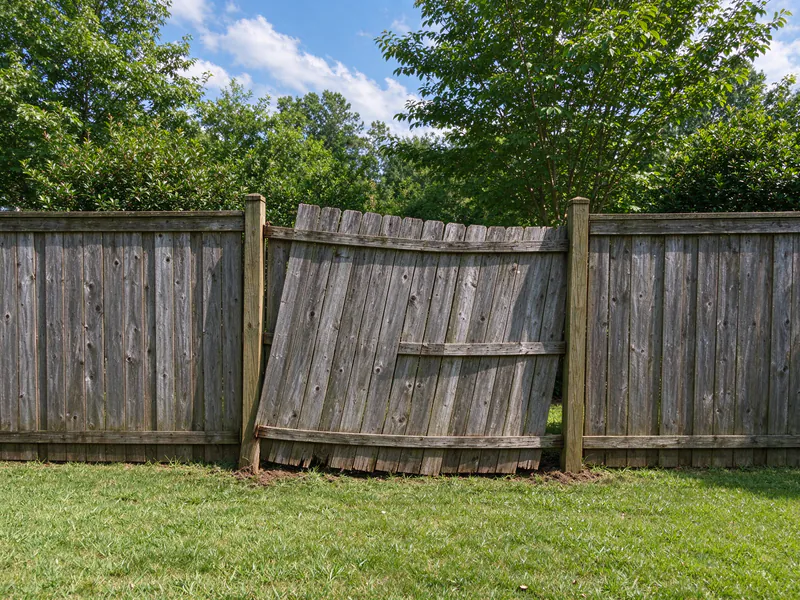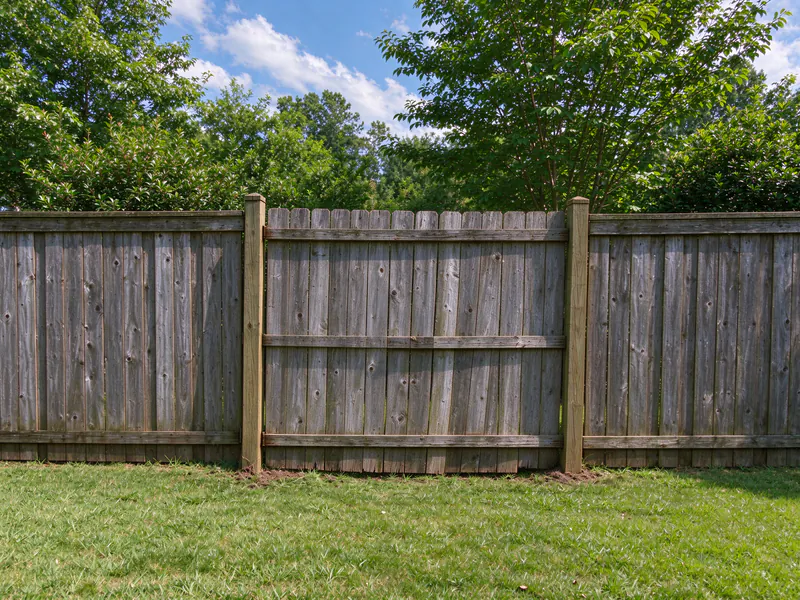
Upright Johns Creek Fencing repairs wood, vinyl, aluminum and chain link fences across Johns Creek and north Fulton, with the work done by licensed and insured fencing contractors. A good repair fixes what failed and checks what is about to, so the next storm does not undo it. The first question on any repair is whether it should be a repair at all: when failures run along most of a fence, replacement costs less over time than replacing one post after another.
Most repair calls in Johns Creek fall into a few groups: wood posts that have rotted or leaned, sections pushed over by wind or a falling limb, broken boards and cracked panels, chain link that has gone slack, and gates that drag. Each has a usual cause, and the fix depends on the cause rather than the symptom.
What happens on the first visit
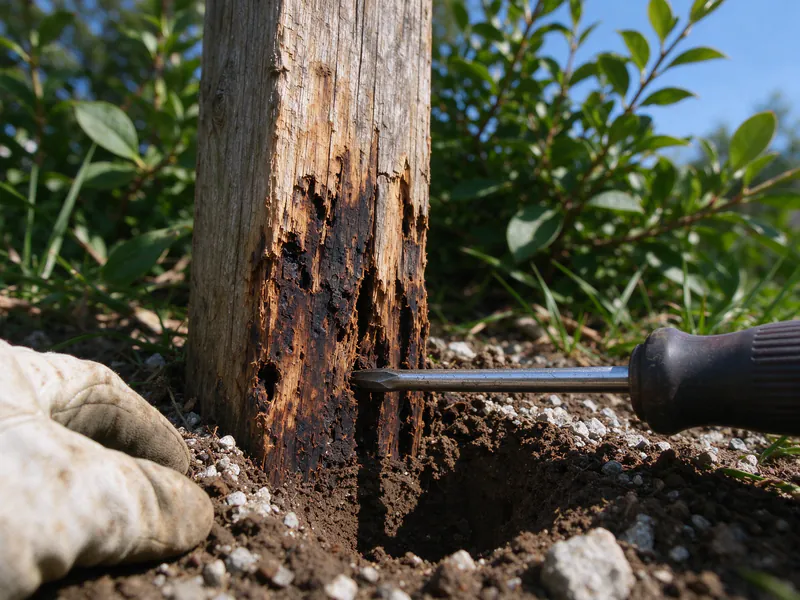
The visit starts at the posts. Each post along the affected run is pushed by hand and probed at ground level, because a post can look straight while its base is soft. Rails are checked where they meet the posts, gates are swung and latched, and chain link is checked for tension and bent framework. Posts on either side of a failure get the same check, since posts of the same age in the same soil tend to fail together.
From that, the visit sorts the fence into three groups: parts that failed, parts close to failing and parts that are sound. The estimate covers the first group and calls out the second, so you can decide whether to fix them now or watch them. If most of the fence is in the first two groups, the visit says so and prices replacement as well.
Leaning and rotted posts
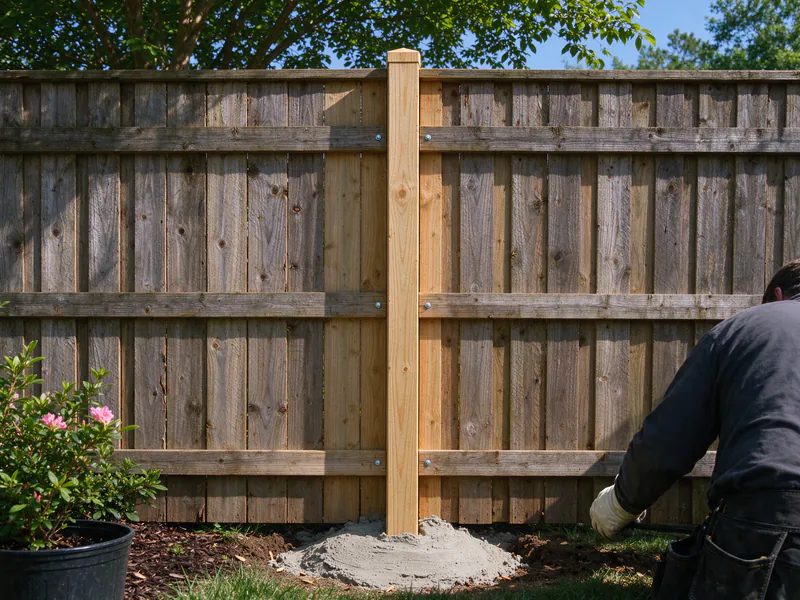
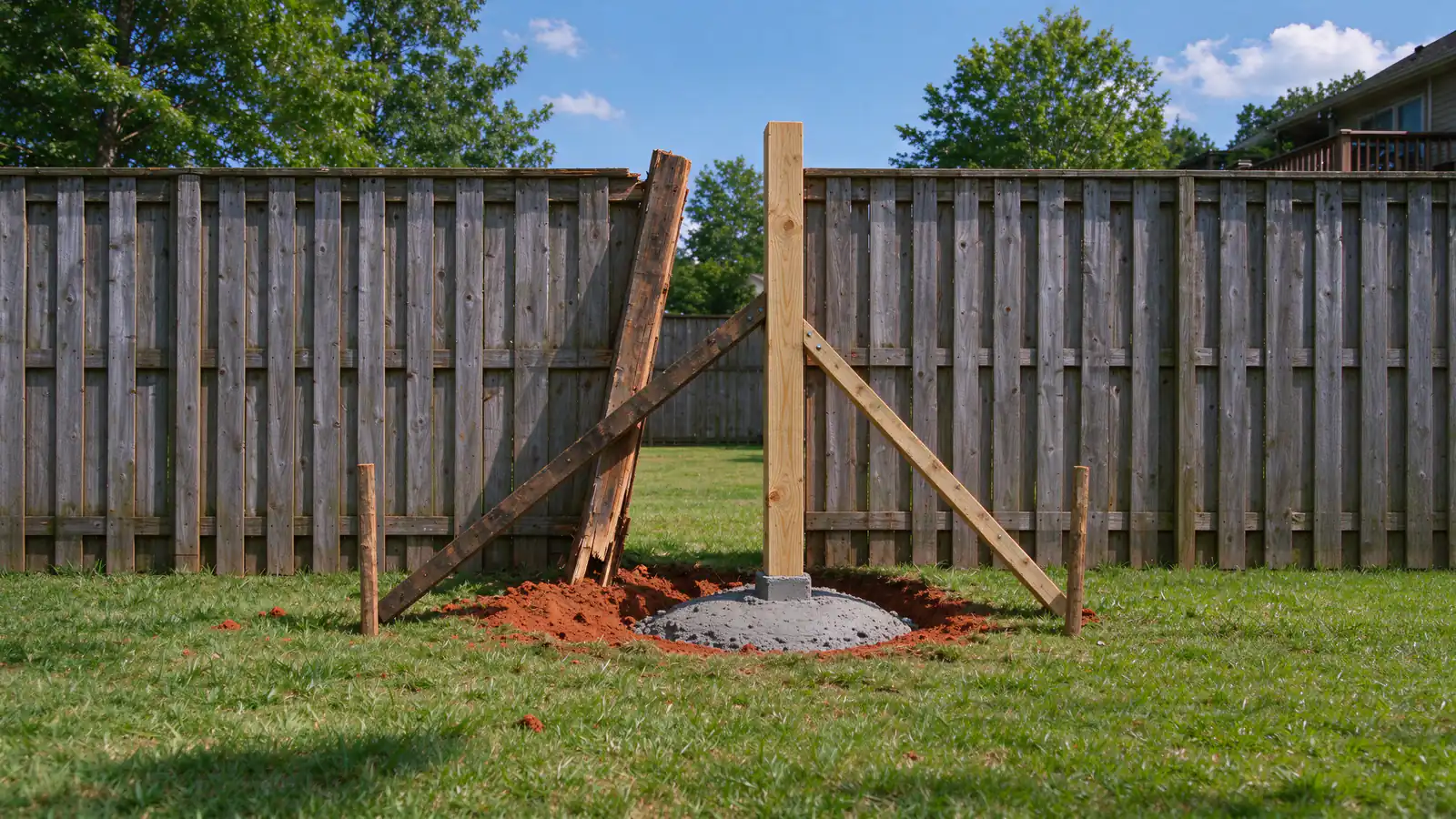
A wood post fails at the soil line because that is where moisture, oxygen and termites meet. On Johns Creek’s clay subsoils, a post set without drainage sits in a pocket of water after every rain. When the base is soft, the post is replaced: the old post and footing come out, and the new one is ground-contact rated, set on a gravel base and finished with concrete crowned to shed water.
A post can also lean while the wood is solid. Wind pushing on a solid privacy fence, a shallow footing or soft ground after heavy rain can tip the whole footing. A solid post like that can often be pulled plumb and reset in a new footing. Bracing a post that is already rotten only delays the replacement. The leaning post guide explains how to tell the two apart.
Storm and tree damage
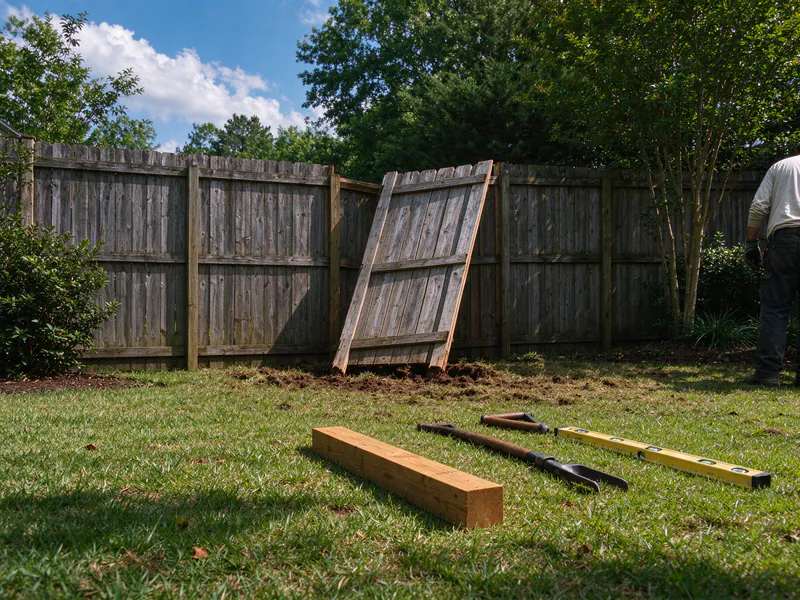
After a storm, the damage is often one or two sections pushed over by wind or crushed by a limb. Posts that snapped at grade usually show rot that was already there; posts that tipped with their footings intact can often be reset. Rails and boards are replaced to match, and the run is pulled back into line.
When a tree is involved, the limb or trunk is cleared first, and the repair waits until it is safe. If the fence also serves as a pool barrier, that section is the priority, because a gap in a barrier is a safety problem rather than a cosmetic one; see the pool fence page for what the barrier needs.
Boards, panels and finishes
Broken or split boards on a wood fence are replaced with the same size and profile. New boards look lighter than weathered ones, so the whole run is often stained after the repair to even it out. Vinyl panels can be replaced one at a time if the manufacturer still makes the same panel and color; if not, the closest match or a full run is the choice. Aluminum panels are matched by style and height.
Chain link that has gone slack
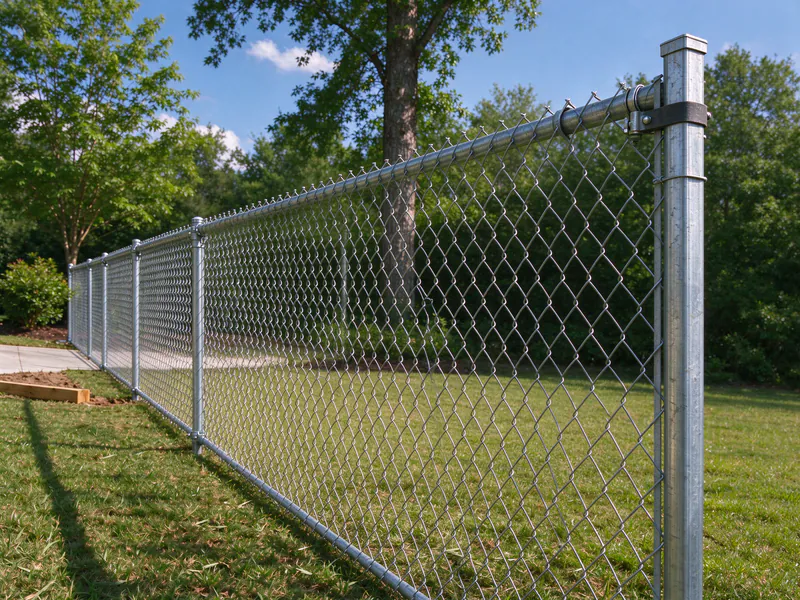
Loose chain link is rarely fixed by tightening a few ties. The fabric is tensioned from the terminal posts at the ends and corners, so when one of those leans, the whole run relaxes. The repair straightens or replaces bent top rails and leaning terminal posts first, then re-tensions the fabric with tension bars and bands and re-ties it to the framework. Bottom tension wire is added where a dog has been pushing under. More on chain link is on the chain link page.
Gates that drag
A dragging gate is usually a post problem. When the hinge post leans, the gate drops at the latch side no matter how tight the hinges are. The repair checks the post first, resets or replaces it if it moves, then braces the gate with a diagonal that runs from the bottom hinge corner up to the latch side and re-hangs it. The sagging gate guide covers the causes in more detail, and new gates are covered on the gate installation page.
Repair or replace?
Count what has failed. If posts are failing along most of the line, the fence is reaching the end of its life and each repair only moves the problem along. If the damage is local and the rest is sound, repair is the better use of money. A fence built off the property line, or one your HOA wants changed, is a replacement no matter its condition. The repair or replace guide has a fuller checklist, and the fence cost guide shows what a full replacement involves.
Keeping a repaired fence standing
A few habits make repairs last. Keep mulch and soil off the bottom of wood fences and away from the posts, so the base can dry between rains. Aim sprinklers away from boards. Trim vines before they work into rails and add weight. Check gates once a season for drag at the latch and push on the hinge post; catching a leaning post early often means a reset instead of a replacement. After a big storm, walk the line and look for posts that moved with their footings, which can usually be reset if they are dealt with before the ground settles around them.