Upright Johns Creek Fencing installs walk gates, double gates and driveway gates across Johns Creek and north Fulton, in wood, vinyl, aluminum, steel and chain link, with the work done by licensed and insured fencing contractors. The gate is the part of a fence that moves every day, so it is the part that fails first when it is built like the rest of the fence. A gate that stays square and latches on its own for years is mostly about its posts and its frame, not its hinges.
What happens on the first visit
The visit measures the clear opening the gate needs, which is decided by the widest thing that must pass through: a person, a wheelbarrow, a riding mower, a trailer or a car. The ground is checked through the gate’s full swing, because a gate that clears the ground when closed can drag halfway open on a sloped yard. For driveway gates, the distance from the street is measured against the setback rules. If the gate is part of a pool barrier, the hardware has to meet barrier guidelines.
The estimate lists the gate, its posts and footings, hardware and any setback or permit requirements. Gates in a new fence are priced as their own lines so you can see what each adds.
Posts first
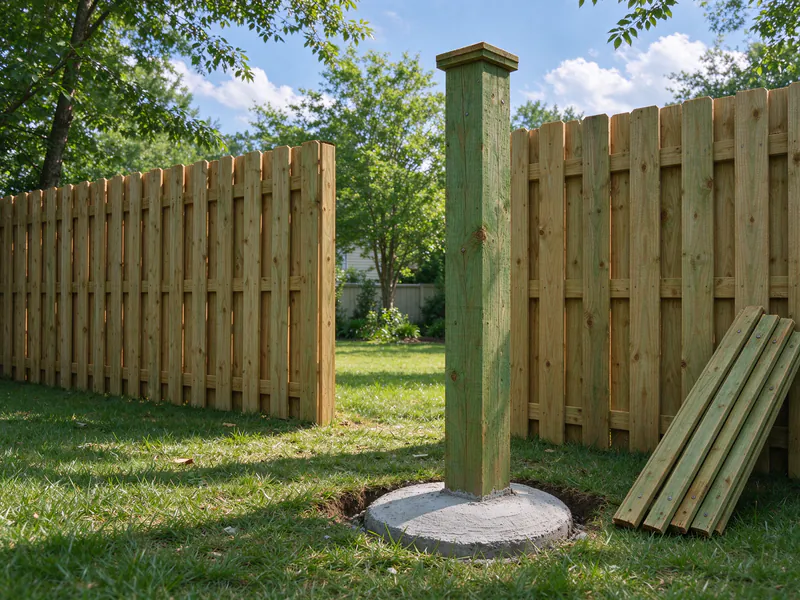
A gate hangs its whole weight off one post, and every opening and closing pulls that post toward the gate. Over time a post set like a line post leans, and the gate drops at the latch side. Gate posts are larger than line posts and set deeper in concrete, on a gravel base so water drains away from the footing. Wide or heavy gates may need a steel post, even in a wood fence. The latch post gets the same treatment so the gate lines up with it.
On Johns Creek’s clay subsoils, the footing under a gate post matters even more than under a line post, because wet clay is what lets a loaded post shift. The post depth guide explains how depth is chosen.
A frame that stays square
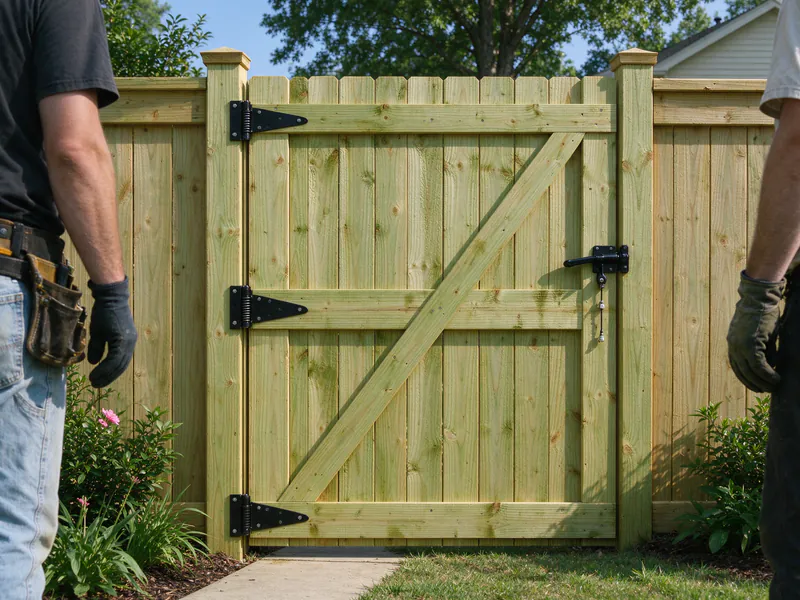
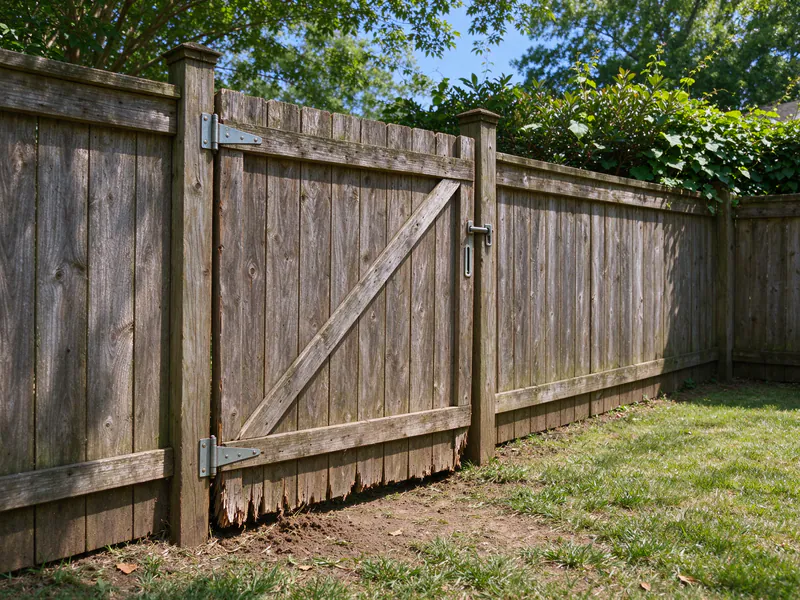
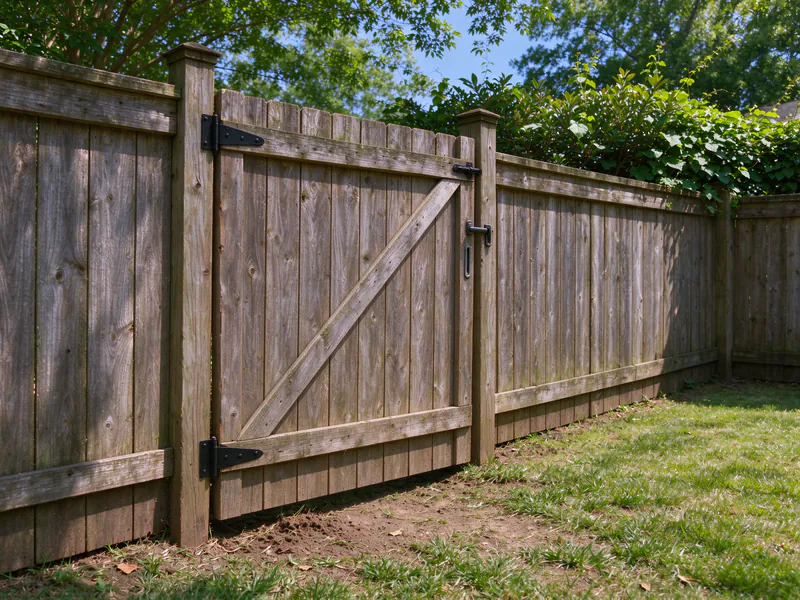
Wood gates are built on a frame with a diagonal brace. The brace runs from the bottom of the hinge side up to the top of the latch side, so the weight of the gate is pushed back toward the hinges instead of pulling the latch corner down. A brace installed the other way does the opposite, which is a common reason gates sag. Vinyl gates need an aluminum or steel insert frame because vinyl alone is not stiff enough. Aluminum and steel gates are welded frames and stay square on properly set posts.
Hardware is matched to the gate’s weight: hinges rated for it, a latch that closes without lifting the gate, a stop so the gate does not swing past the latch post, and corrosion-resistant fasteners in treated wood. Where a gate must close on its own, as with pool barriers, self-closing hinges are used. The sagging gate guide covers what goes wrong when any of this is missing.
Walk gates
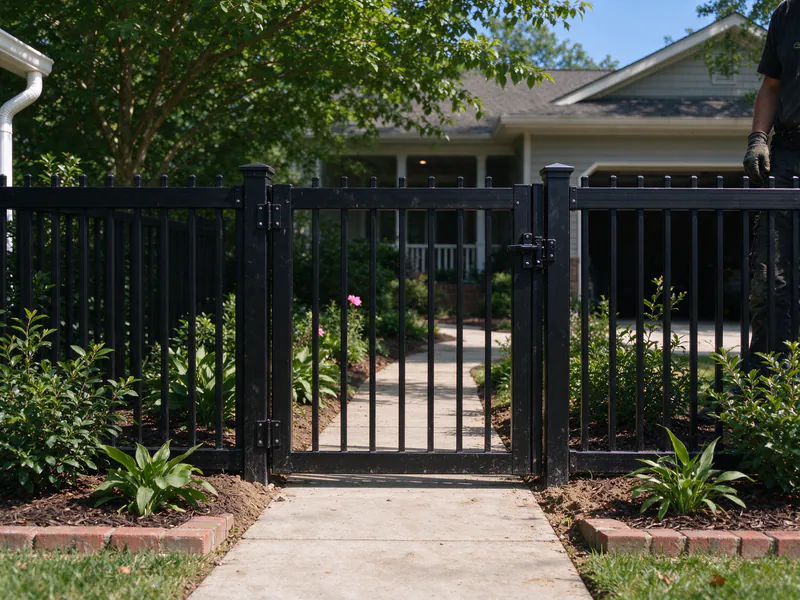
Most walk gates are about 4 feet wide, enough for a person and a wheelbarrow. They go where people actually walk: from the driveway to the backyard, beside the house, into a garden. A self-latching gate keeps dogs in when someone forgets to close it, and a gate that swings into the yard is easier to use from the driveway side.
Double and driveway gates
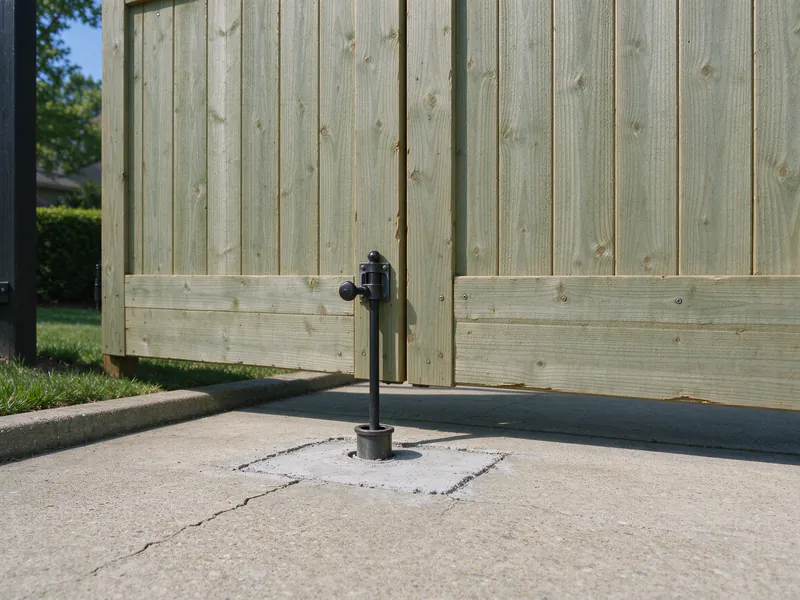
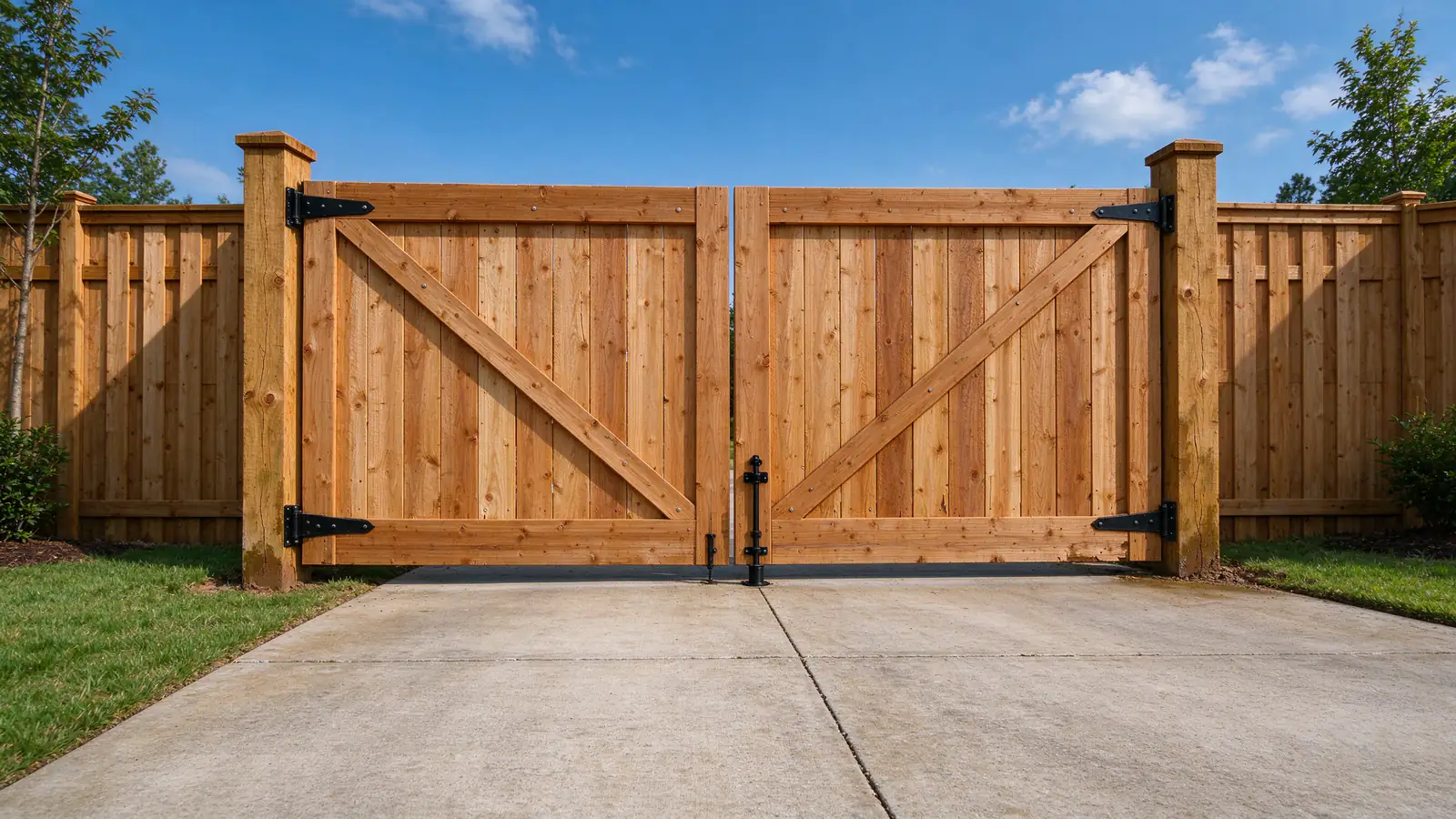
Wide openings use double gates, two leaves that meet in the middle, so each leaf is shorter and puts less load on its post. One leaf is held closed with a drop rod into the ground or a sleeve in the driveway, and the other latches to it. Driveway gates can be manual or automated; automation adds power, controls and safety equipment, covered on the automatic gate page.
The Johns Creek zoning code keeps any part of an automobile gate 20 feet from a public right-of-way (confirm with the city). Sandy Springs requires gates to open inward and sit 30 feet from the edge of pavement, with masonry piers on both sides of stand-alone driveway gates. Those setbacks often decide where the gate goes on the driveway.
Gates on slopes
A gate that swings over rising ground hits it partway open. On sloped driveways and yards, the gate is hung to swing downhill, split into two shorter leaves, raised enough to clear the grade with the gap closed by other means, or replaced with a sliding gate. The swing vs sliding gate guide compares the choices.
Pool gates
Pool barrier gates follow specific guidelines. The Consumer Product Safety Commission’s pool barrier guidance calls for pool gates to open outward from the pool and to be self-closing and self-latching, and when the latch release is lower than 54 inches from the bottom of the gate, to place it on the pool side at least 3 inches below the top. Local codes set the binding requirements, so the gate is planned with the pool permit. See the pool fence page.
Adding a gate to an existing fence
A new gate can be added to an existing fence: a section is removed, new gate posts are set on each side and the gate is hung between them. Existing line posts are rarely strong enough to carry a gate, so reusing them is the most common shortcut that leads to sagging.
What a gate costs
A walk gate in a new fence typically adds about $150 to $600 in the Atlanta area, depending on width, material and hardware. Double gates, driveway gates and automation are priced per project, because size, posts, hardware and site conditions vary widely. The fence cost guide shows how gates fit into a full estimate.
Matching the gate to the fence
A gate looks best when it matches the fence it sits in: the same boards and cap on a wood fence, the same panel style on aluminum or vinyl, the same fabric on chain link. Where a fence is being replaced, the gate is usually replaced with it, because an old gate on new posts rarely hangs true.