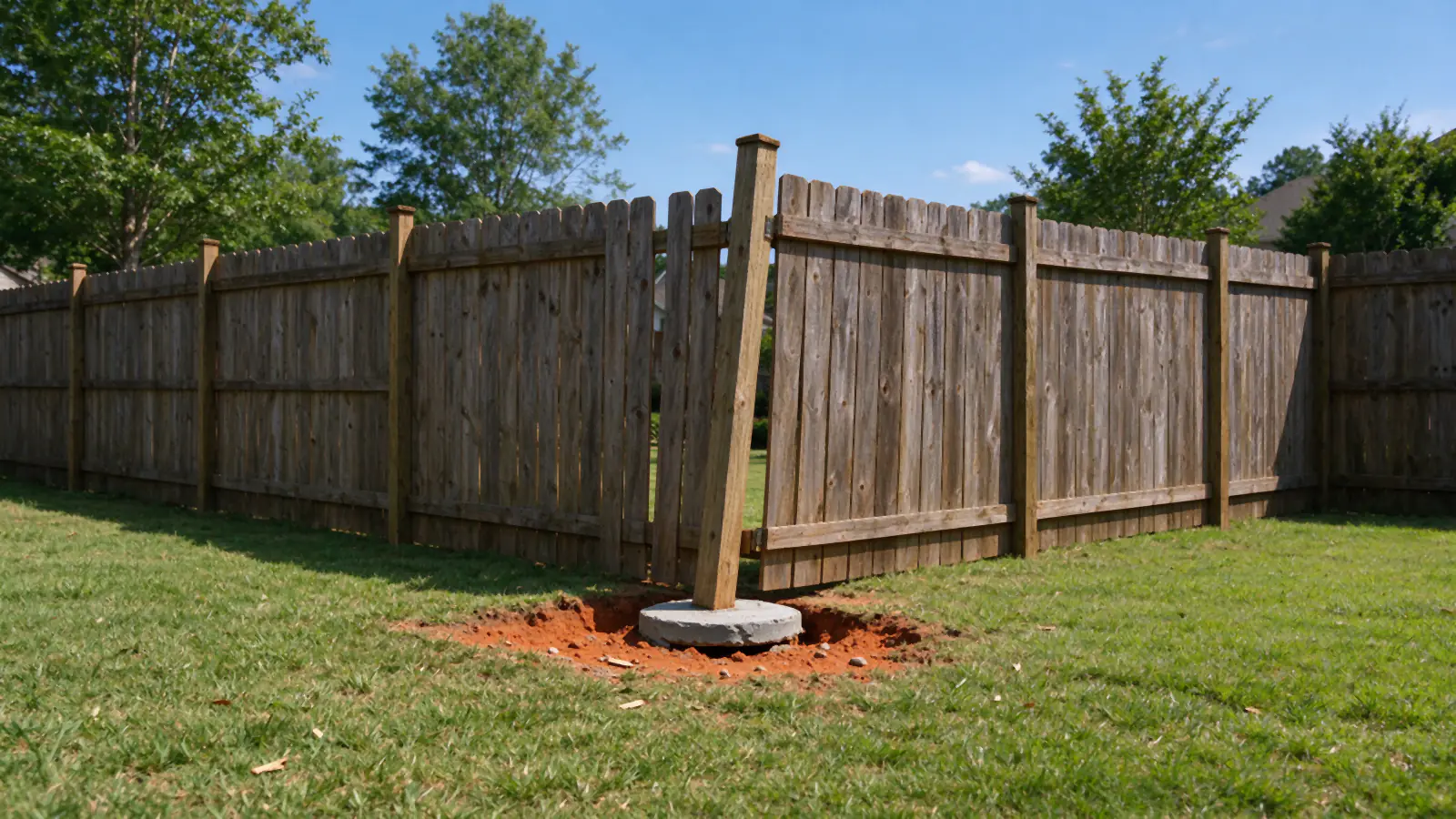
Find out why it leans first, because the fix depends on the cause. If the post has rotted at the soil line, it is replaced. If the post is sound but its footing has tipped or broken in soft ground, it is reset deeper and wider with drainage. If a gate hangs from it, the post is usually upsized. A steel repair bracket can hold a slightly rotted post for a while but is a short-term fix.
Upright Johns Creek Fencing handles fence repair across north Fulton, and leaning posts are among the most common calls. This guide explains how to tell what is wrong.
Rot or footing: the first check
Dig a few inches of soil away from the base of the post and push a screwdriver into the wood just below grade.
- Soft, wet or crumbling wood: the post has rotted at the soil line. It bends there no matter how solid the concrete is. Replacement is the answer.
- Hard wood, and the post and concrete move together: the post is sound, but the footing has tipped in the soil. Resetting is the answer.
- Hard wood, and the post moves inside the concrete: the post has shrunk or rotted inside its collar, or the concrete was too thin. Replacement or reset, depending on how much wood is left.
Metal posts do not rot, but they can rust at the base where water collects, or their footings can tip the same way.
Why posts lean in north Fulton
The soils around Johns Creek are mostly Piedmont types with clayey subsoils. Clay grips a post when dry but softens when saturated, and a post hole in clay can hold water like a cup. After a wet stretch, a solid privacy fence pushed by wind can rotate its posts in the soft soil. On slopes, soil creeps downhill over time and takes posts with it. Near creeks, damp bottomland soils hold posts loosely.
Other common causes:
- Posts set too shallow for the fence’s height or for a gate. The post depth guide explains how depth is chosen.
- Sprinklers soaking the fence line every day.
- Tree roots growing against a post and pushing it over.
- A fallen limb or a vehicle hitting the fence.
- A dog digging along the line and undermining footings.
Replacing a rotted post
The old post is cut off or pulled, and its concrete is broken out or a new hole is dug beside it if the old footing cannot be removed. The new post is ground-contact rated, set on a gravel base, aligned with its neighbors and set in concrete crowned to shed water. The rails are then re-fastened to it, and any boards that cracked when the post leaned are replaced. If the new hole is dug with a powered auger, a Georgia 811 locate is required first; the 811 guide explains the wait.
Resetting a sound post
When the post itself is solid, the fence can be supported, soil dug away on the side the post leans toward, and the post and footing pushed back to plumb. The footing is then braced, and the hole filled with compacted gravel or new concrete. A footing that is too small or cracked is broken out and replaced with a larger one. Either way, the cause is addressed too: a re-aimed sprinkler, a drainage path or a root.
Repair brackets and spikes
Steel repair spikes are driven into the ground beside a post and bolted to it. They hold a post with modest rot at the base for a while and are quick to install. They do not fix a failed footing or a badly rotted post, and they look like a repair. They suit a temporary fix while a larger repair or replacement is planned.
Gate posts
A leaning gate post shows up as a gate that sags, drags or no longer latches. Because a gate hangs its weight off the post, a leaning gate post usually gets replaced with a larger, deeper one, or a steel post. The sagging gate guide explains how to tell a post problem from a gate frame problem.
When many posts lean
One leaning post is a repair. Several leaning the same direction point to a cause in the fence’s design or setting: posts too shallow for a solid fence, a slope moving downhill, or an old fence whose posts are all reaching the end of their life. At that point, the repair or replace guide helps decide whether to keep fixing or rebuild. The wood fence lifespan guide explains why posts at the soil line are the weak point.
Don’t wait too long
A leaning post pulls the rails attached to it, loosens fasteners, cracks boards and puts more load on its neighbors. A storm can turn one lean into a fallen section. Fixing it early is almost always cheaper than fixing what it takes with it. The fence cost guide covers repair pricing, and questions about a specific fence can go to the number at the top of the page or the form below.