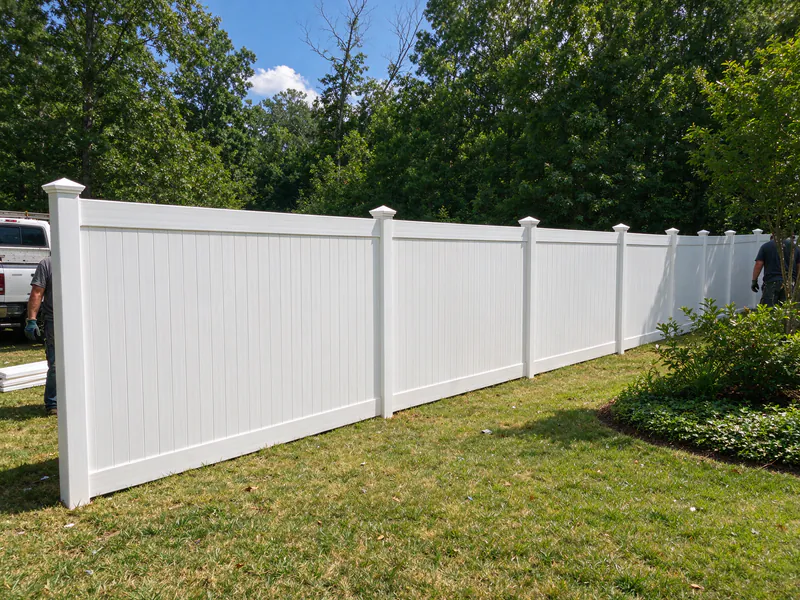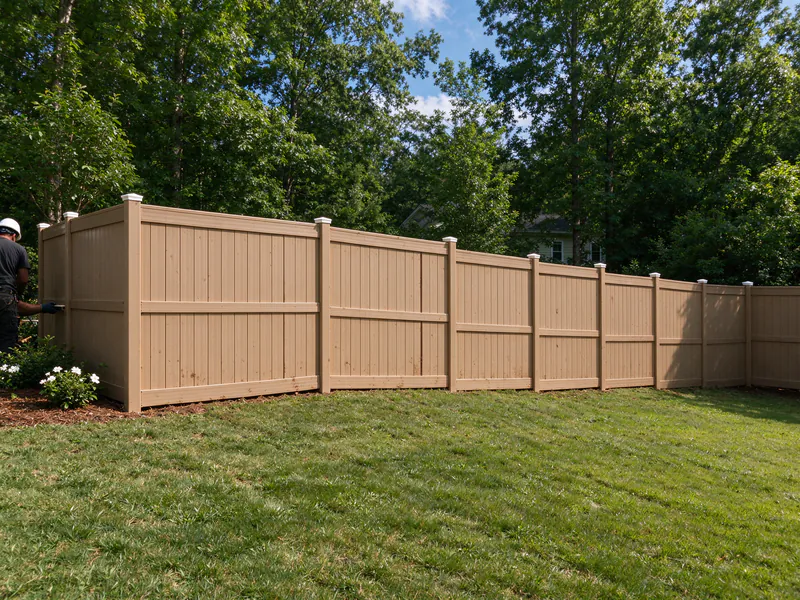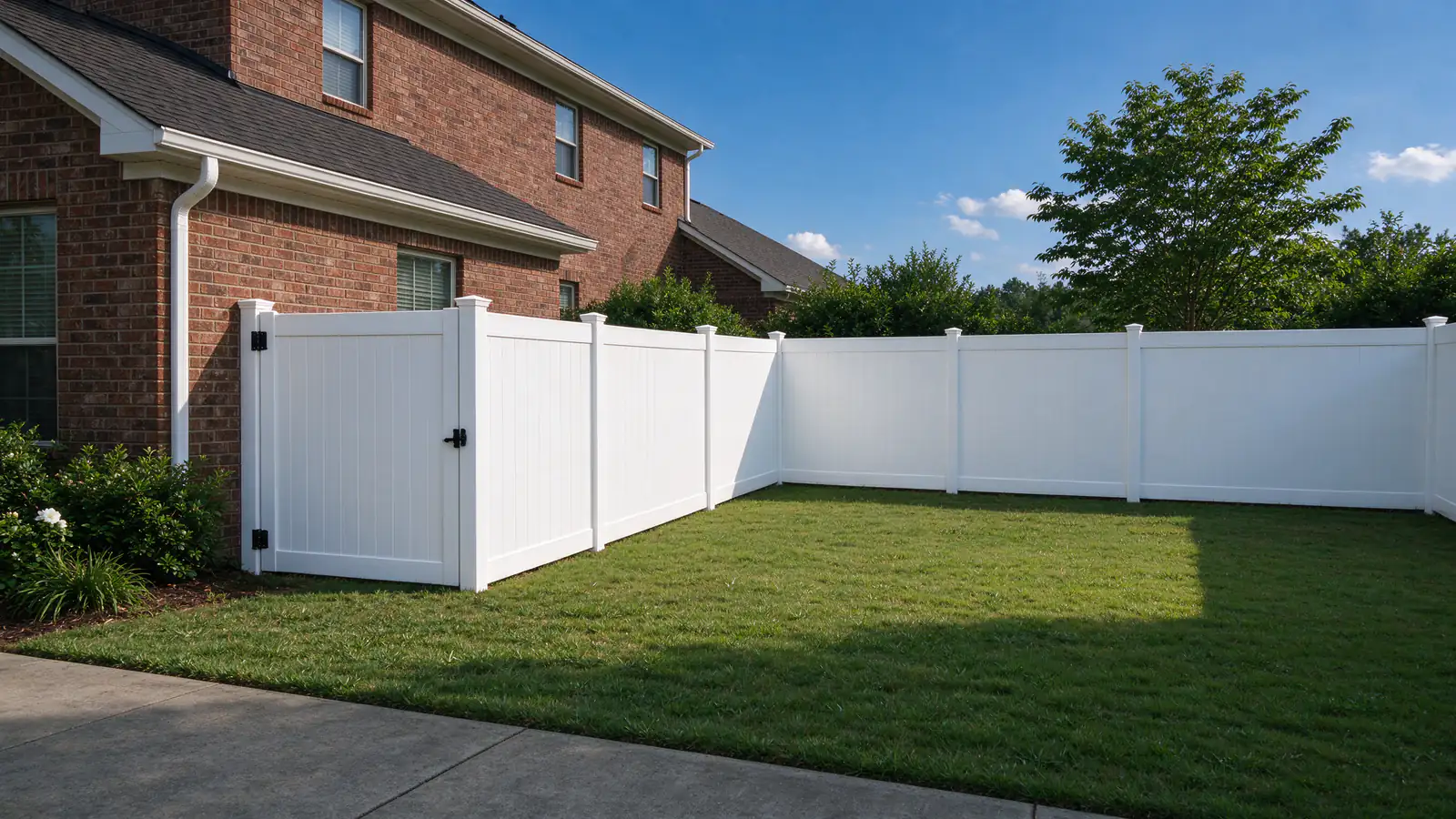
Upright Johns Creek Fencing installs vinyl fences in Johns Creek and the north Fulton cities that allow them, with the work done by licensed and insured fencing contractors. Vinyl appeals for the obvious reasons: it does not rot, termites ignore it, and it never needs stain. It also has limits that matter here, from nearby cities that restrict it to the way it handles slopes and impact. Knowing those up front is the difference between a vinyl fence that looks right for years and one that disappoints.
What happens on the first visit
The visit starts with whether vinyl is allowed at your address. It is in Johns Creek, but Sandy Springs does not allow new vinyl fences except to replace existing vinyl in kind, and Peachtree Corners does not list vinyl among its permitted fence materials. HOAs also set color and style rules. Then the line is measured, the grade is checked section by section, and gate locations are marked, because grade and gates are where vinyl needs the most planning.
The estimate lists panels, posts, any reinforcement, gates, stepping or kickboards, the Johns Creek permit and tear-out of any old fence.
Where vinyl is allowed
Johns Creek allows vinyl, with one rule to check: the zoning code does not allow wire or plastic fencing adjoining a street right-of-way in single-family detached developments (confirm with the city for your lot). That mostly matters for corner lots and fences along a road. Sandy Springs’ development code prohibits vinyl except to replace an existing vinyl fence in kind. Peachtree Corners’ residential fence guidelines list brick, stone, wood, stucco, split rail, wrought iron and aluminum styled like wrought iron as permitted materials, and vinyl is not on the list; confirm with that city before planning vinyl there. HOAs often limit colors to white, tan or almond.
Setting vinyl posts in clay
Vinyl posts are hollow, so they are set in concrete like wood posts, with a gravel base under each so water drains away from the footing. Corner, end and gate posts often get an aluminum or steel insert, or are filled with concrete, to stiffen them. Line posts are spaced to match the panels exactly, because vinyl panels are made to length and cannot be stretched to fit a misplaced post. That makes layout accuracy more important than with wood, which can be cut to fit on site. The post depth guide explains how depth is set for height and soil.
Slopes and stepping
Most vinyl privacy panels are rigid rectangles that cannot rack, so on a slope they are stepped: each panel stays level and drops at the post. That leaves a triangle of open space under each panel on the downhill side. On a gentle slope the gaps are small; on the steeper backyards common in Johns Creek, they can be large enough for a dog to pass. Kickboards, panel extensions or a gravel strip close them. Some picket styles rack a little. The slope guide compares the options, and the dog fence guide covers keeping pets in.
Gates that stay square
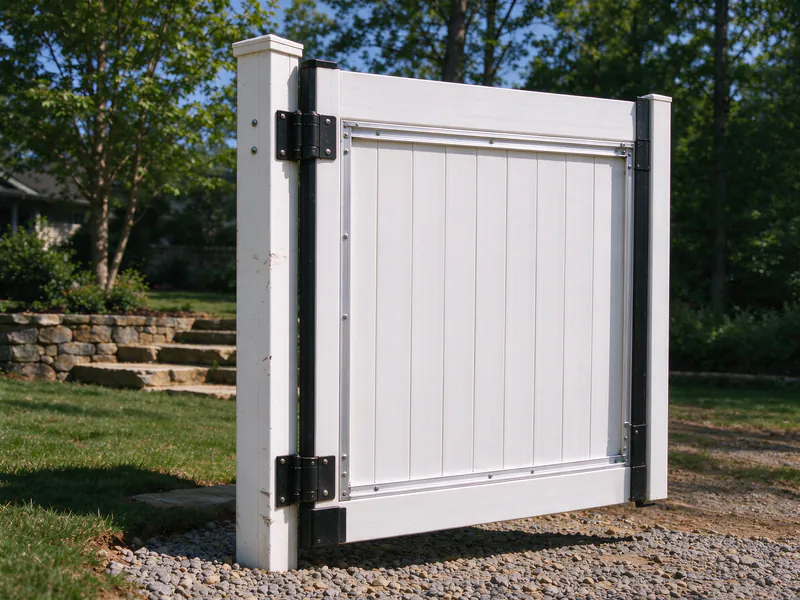
Vinyl is not stiff enough on its own for a gate. A vinyl gate needs an aluminum or steel insert frame inside its rails, hinge and latch posts reinforced to carry the weight, and hinges rated for it. Without those, vinyl gates drop at the latch side within a season. Wide openings use double gates with a drop rod. For pool barriers, gates also need self-closing hinges and self-latching hardware that meet the code; see the pool fence page.
Living with vinyl in Georgia
Vinyl does not need stain, but it is not maintenance-free. The shaded side of a fence can grow mildew and green algae in humid weather; a garden hose and mild cleaner usually remove it. Vinyl can crack under impact from a mower, a thrown branch or a falling limb, and in very cold weather it is more brittle than usual. Cracked panels can be replaced one at a time if the manufacturer still makes the same panel and color, which is worth considering when choosing an uncommon style. The wood vs vinyl guide compares upkeep over time.
Privacy, picket and semi-privacy styles
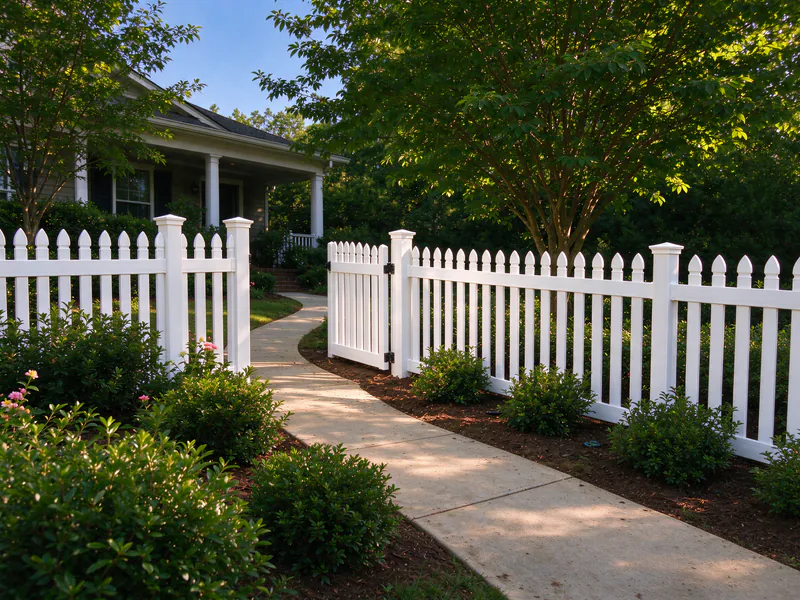
Vinyl comes in solid privacy panels, semi-privacy styles with small gaps or lattice tops, and picket fences for front yards and gardens. Privacy panels give full screening and catch the most wind, so posts and footings are sized for it. Picket styles suit front yards where HOAs allow fences. The privacy fence page covers height limits and wind load.
What a vinyl fence costs
Vinyl typically runs about $20 to $40 per foot installed in the Atlanta area, before gates, tear-out and the $75 Johns Creek residential permit. Privacy panels, taller heights, steep slopes that need stepping and kickboards, and reinforced gates push toward the high end; picket styles on level ground sit toward the low end. The fence cost guide shows how an estimate adds up.
Colors, textures and matching later
White is the most common vinyl color, followed by tan and almond. Some manufacturers offer wood-grain textures and darker colors. Darker vinyl absorbs more heat in Georgia sun, which some manufacturers address with special formulations; ask about it if you want a dark fence in full sun. Because panels are made by specific manufacturers, the brand, line and color are recorded on the estimate, so a damaged panel can be matched later.
Vinyl next to other materials
Vinyl often runs along rear and side lines for privacy while aluminum handles the front or the pool. Where two materials meet, the transition is made at a post with each fence on its own support. On corner lots in Johns Creek subdivisions, the street-facing run may need to be a different material because of the zoning code’s limit on plastic fencing along streets (confirm with the city). That is checked during layout, before panels are ordered, since vinyl panels are made to length and are costly to change once cut. Gate openings are measured twice for the same reason.