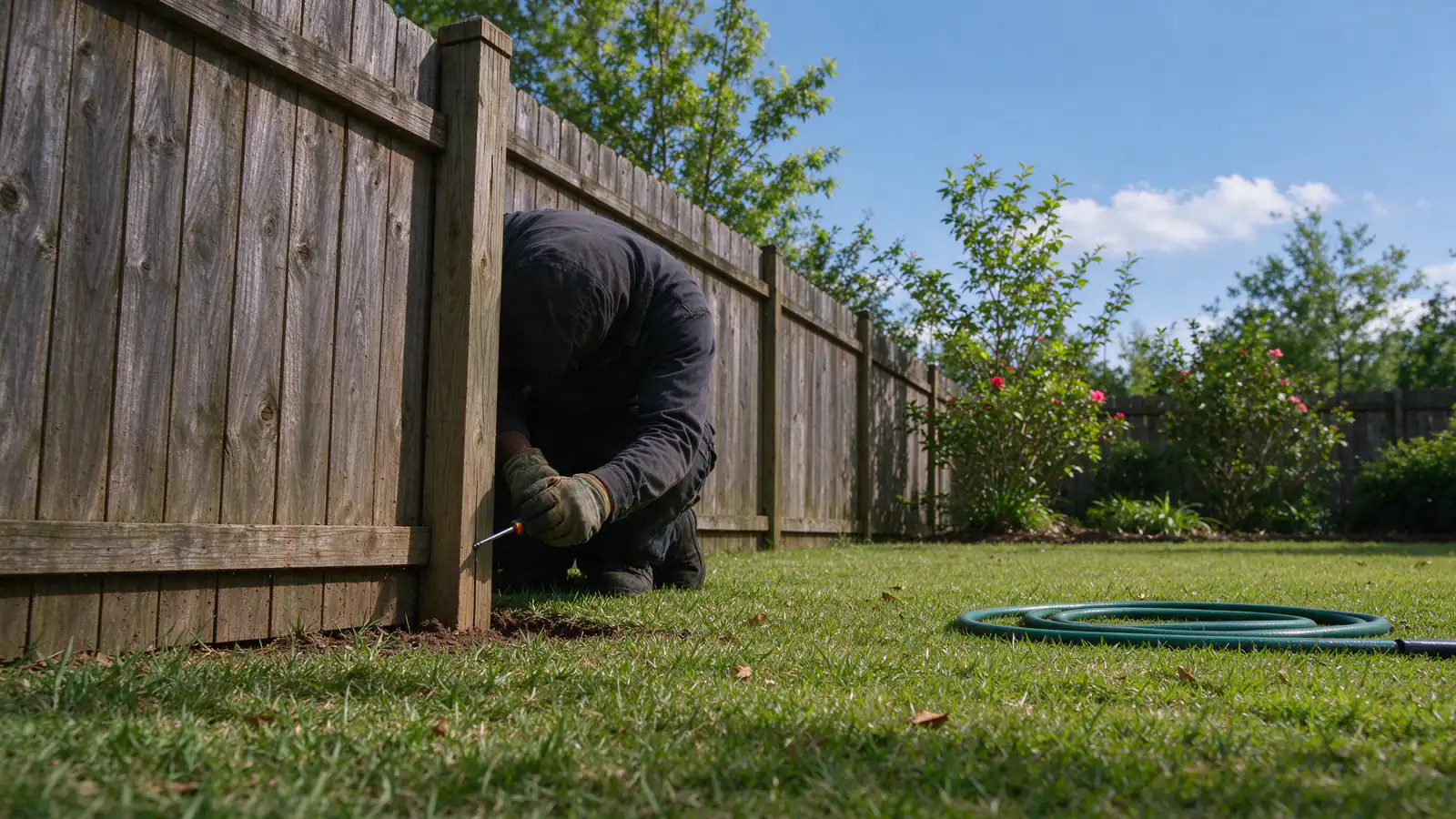
Twenty minutes walking the fence line a couple of times a year catches the small problems before they spread: a post starting to rock, a sprinkler soaking the boards every morning, a gate that has started to drag. Georgia’s heat, humidity, pine pollen and summer storms all work on a fence, and each season brings its own checks.
Upright Johns Creek Fencing handles fence repair and staining across north Fulton. This checklist covers what an owner can check, and when to call for help.
Every visit: the basics
- Push each post at the top. It should not rock. A post that moves is the start of a lean; the leaning post guide explains what to do.
- Check the base of wood posts. Dig back an inch or two and push a screwdriver into the wood. Soft wood at the soil line is rot.
- Open and close every gate. It should swing freely and latch on its own. A gate that drags is sagging; see the sagging gate guide.
- Look along the line from one end. Any section out of line is worth a closer look.
Spring
- Wash off pine pollen. The yellow coating feeds mildew. A garden hose works on most fences.
- Check sprinklers. Spring is when systems come back on. Re-aim any heads that spray the fence.
- Inspect for carpenter bees. Round holes in rails and cap boards are their tunnels.
- Look for termite tubes at the base of wood posts.
Summer
- Watch for storm damage after thunderstorms. The storm damage post covers what to do.
- Trim vines and shrubs away from the fence, so boards can dry.
- Check stain. If water no longer beads on boards in full sun, they may need restaining in the fall.
Fall
- Clear leaves and pine straw from the bottom of the fence and from sliding gate tracks.
- Restain if needed. Fall’s drier stretches are good staining weather; the staining guide covers timing.
- Check trees over the fence. Dead limbs over the line are the most common cause of storm damage here.
Winter
- Walk the line after hard rain. Wet clay softens, and posts that were marginal show it.
- Check gate latches as wood shrinks in cold, dry weather.
- Plan repairs and replacements for spring before the busy season.
By material
Wood. Stain on schedule, keep soil and mulch off the bottom boards, and replace split boards before water gets into the rails. The wood fence lifespan guide explains why posts and soil contact matter most.
Vinyl. Wash mildew and algae off the shaded side. Check for cracks after impacts and in cold weather. Keep the brand and color on file for repairs.
Aluminum and steel. Rinse occasionally. On steel, touch up scratches promptly so rust does not spread. Check that gate hinges and latches still align.
Chain link. Check for sagging fabric between posts and leaning end posts. Look for bent top rails after storms.
Gates
Gates need the most attention on any fence. Tighten hinge screws, lubricate hinges and latches, and check that self-closing gates still close from a slightly open position, especially around pools.
Keep records
Keep the installation date, the material, the stain brand and color, and for vinyl or aluminum, the manufacturer and style. Those details make matching repairs and restaining much easier years later.
When to call
Call for help when posts lean, rot has reached the posts, a gate cannot be adjusted to latch, or a storm has knocked down a section. A single repair is usually far less than fixing what a neglected problem takes with it. If repairs keep coming, the repair or replace guide helps decide. Questions about a specific fence can go to the number at the top of the page or the form below.